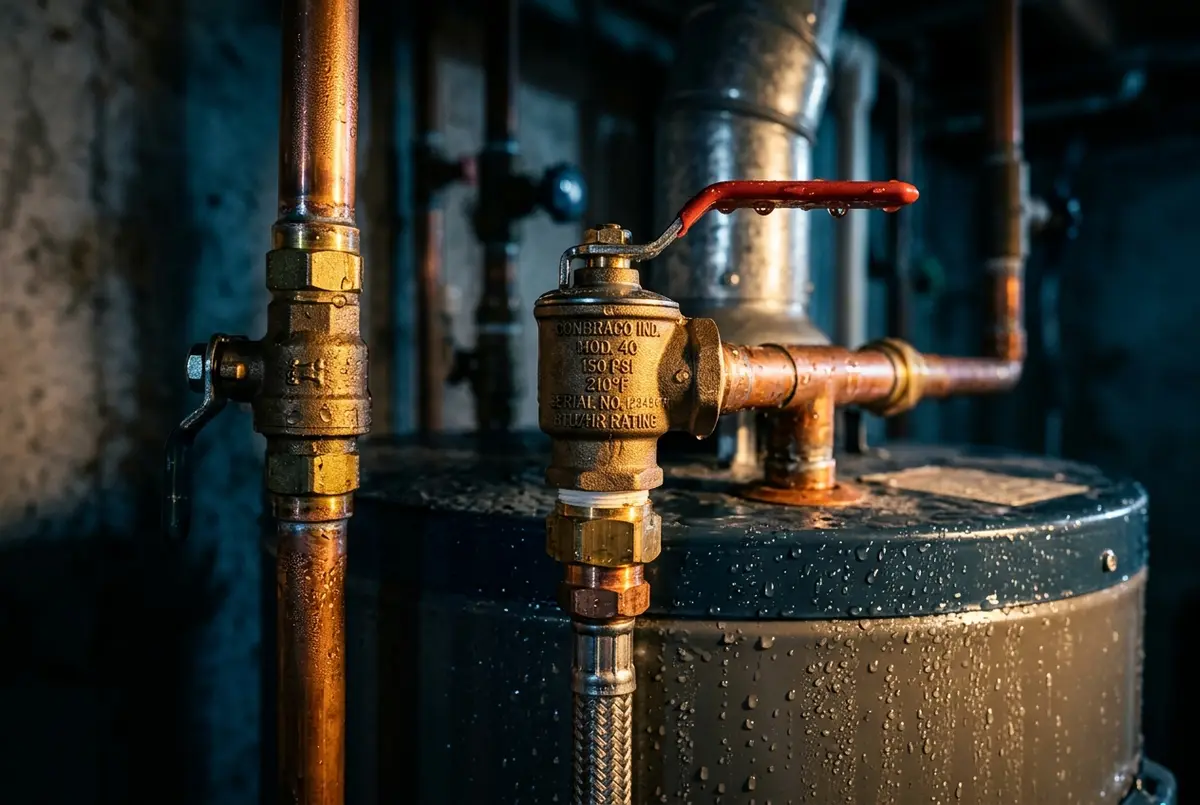
A water heater anode rod is the single most important line of defense protecting a steel storage water heater tank from corrosion. Inside every conventional tank heater installed across Knoxville, TN, water and dissolved mineral electrolytes constantly attack the steel lining. The anode rod sacrifices itself through electrochemical action to preserve the tank walls. Understanding how this component operates and performing regular anode rod inspection knoxville can add five to eight years to the operating life of your water heating appliance.
Quick Summary: Anode Rod Inspection Essentials
- Inspection Cadence: Check the rod every 2 to 3 years in East Tennessee; check annually if your home uses a water softener.
- Replacement Threshold: Replace immediately when more than 50% of the sacrificial metal has eroded or when the central steel wire core is exposed.
- Knoxville Water Factor: Moderate municipal water hardness from Knoxville Utilities Board (60 to 120 mg/L) causes steady galvanic activity.
- Typical Service Cost: Professional anode replacement generally ranges from $180 to $350, compared to $1,400 to $3,200 for emergency tank replacement after a rust breach.
How Sacrificial Galvanic Protection Works
Steel water heater tanks are lined with a vitreous porcelain enamel (glass lining) during factory manufacturing. However, microscopic imperfections, thermal expansion cracks, and weld seams inevitably expose tiny points of bare steel to hot water. When two different metals are immersed in an electrolyte solution like tap water, an electrochemical cell is established. Because magnesium and aluminum are more chemically active on the galvanic series scale than steel, electrical current flows naturally from the rod to the exposed steel points.
The sacrificial anode rod corrodes away while the tank steel remains intact. Once the rod metal is completely eaten away, corrosive ions turn their full attention to the tank steel. Within 12 to 24 months after total anode depletion, rust pinholes develop at the base or seams, leading to an irreparable bottom tank leak.
Knoxville Water Conditions & Anode Depletion Rates
Water supplied throughout Knox County by KUB and regional utility districts is treated surface water from the Tennessee River basin. It features moderate calcium and magnesium mineral content, with typical hardness readings between 3.5 and 7.0 grains per gallon (60 to 120 mg/L). While this level of hardness is not extreme, the dissolved carbonates create active electrical conductivity inside the water heater.
If your home in Farragut, Cedar Bluff, or Powell utilizes a salt-based water softener, the sodium ions exchanged into the water increase electrical conductivity dramatically. Softened water can deplete a standard magnesium anode rod in as little as 2 to 3 years. Regular anode rod inspection knoxville ensures you catch this depletion before the tank lining suffers permanent damage.
Anode Rod Material Types: Magnesium vs. Aluminum vs. Titanium
| Rod Material | Best Suited For | Expected Lifespan | Pros & Cons in Knox County |
|---|---|---|---|
| Magnesium | Standard municipal water without severe sulfur smell | 3 to 5 Years | Provides the strongest cathodic protection voltage; can interact with sulfate bacteria to produce rotten egg odor. |
| Aluminum / Zinc Alloy | Homes with noticeable hot water odor or well supplies | 4 to 6 Years | Zinc addition neutralizes sulfur-producing bacteria; safe for municipal treated water. |
| Powered Titanium | Long-term protection without sacrificial metal loss | 10+ Years | Uses a plug-in electrical module to pulse micro-current; never depletes, but requires a nearby electrical outlet. |
Warning Signs That Your Anode Rod Has Failed
Because the anode rod is hidden entirely inside the top port of the water heater, physical deterioration cannot be seen from the outside. However, several clear operational warning signs point toward end of life:
- Rotten Egg or Sulfur Odor: When bacteria react with decaying magnesium, hydrogen sulfide gas builds up inside the tank. Switching to an aluminum-zinc alloy rod typically resolves this issue.
- Rust-Tinted Hot Water: If your hot water runs brownish or yellow while cold water remains completely clear, internal tank corrosion has already begun.
- Popping or Rumbling Noises: As anode rods deteriorate, metal particles crumble and collect on the bottom tank floor alongside calcium sediment, causing localized boiling sounds.
- Tiny Gelatinous Particles at Aerators: Corroding aluminum rods can produce a white or grayish aluminum hydroxide gel that clogs sink aerators and shower valves.
Step-by-Step Anode Inspection Process
Inspecting or changing an anode rod requires basic plumbing tools and careful preparation:
- Shut Off Power or Gas: Turn the 240V water heater breaker to OFF or turn the gas dial to OFF.
- Turn Off Cold Water Supply: Close the cold water inlet valve on top of the tank to isolate incoming line pressure.
- Drain 2 to 3 Gallons: Connect a garden hose to the bottom drain valve and discharge a few gallons to relieve pressure and clear headspace.
- Loosen the Hex Head: Locate the 1-1/16 inch hex bolt head on top of the heater. Use a 1/2-inch drive breaker bar and a deep 1-1/16 inch socket to break the factory thread seal counter-clockwise.
- Extract and Inspect: Carefully lift the rod straight up out of the ceiling opening. If ceiling clearance is limited, a flexible segmented rod may be required for reinstallation.
- Evaluate Thickness: If the rod is thinner than 1/2 inch in diameter, feels brittle, or shows bare central wire core, discard and thread in a new replacement wrapped with 5 turns of PTFE thread tape.
Need Professional Water Heater Diagnostics in Knoxville?
If your anode rod is stuck, your water smells of sulfur, or you suspect internal tank corrosion, our local licensed Knoxville plumbing technicians can inspect, test, and service your system safely. Call 24/7 at (865) 856-9052.